TL;DR
Tree roots get into drains through cracked joints, hairline fractures or loose seals, drawn in by the moisture and nutrients inside the pipe rather than any deliberate targeting of it. Once inside, they spread and thicken, catching debris and causing repeat blockages at the same point in the run. Cutting or jetting clears the immediate obstruction, but only a structural repair like lining seals the entry point so roots can't come back. If you've got a recurring blockage in a mature, tree-lined street around Aldershot or Ash, request a fast, fixed-price quote online and we'll survey the run before recommending which route makes sense.
Why this is a genuine Aldershot and Ash problem
This isn't a generic drainage issue — it's particularly common locally for a specific reason. Much of Aldershot and neighbouring Ash grew up around mature, tree-lined residential streets, many laid out alongside the Victorian and Edwardian housing that still lines roads near North Town, and the older village centres around Ash Green and Tongham. The drainage serving these properties is often original vitrified clay pipe, jointed in short sections rather than the long, sealed plastic runs used today. Every joint is a potential weak point, and decades of ground movement, tree growth and seasonal wetting and drying from the area's mixed London Clay and Bagshot Sand geology only widens the gaps over time. Put mature street trees directly above ageing jointed pipework and root ingress becomes almost inevitable eventually.
The warning signs to watch for
Root ingress rarely announces itself with a single dramatic event — it builds gradually:
- **A blockage that clears then returns**, often within weeks, at the same fixture or the same point in the garden.
- **Gurgling from a toilet or sink** when another appliance drains, a sign that flow is being restricted somewhere downstream.
- **Slow-draining water** that gets progressively worse rather than staying constant.
- **A seasonal pattern** — blockages that worsen in spring and summer when root growth is most active, and ease off slightly over winter.
- **Sunken or uneven patches of lawn or paving** tracking the line of the drain run, where a collapsing pipe has let the ground above it settle.
If more than one of these applies, the sensible next step is a CCTV drain survey rather than repeated call-outs to clear the same blockage. A camera run will show exactly where the roots have got in and how much of the pipe wall is compromised.
Why older clay pipe is especially vulnerable
Vitrified clay was the standard UK drainage material for most of the twentieth century, and it's a genuinely durable product when it's intact. The vulnerability isn't the clay itself — it's the joints. Original clay pipe was laid in short lengths, sealed with mortar or bitumen-based joints that were never designed to stay perfectly watertight for a century. As those joints degrade, they open a route for both water to escape outward and fine roots to find their way in, following the moisture gradient toward the pipe. Once a root tip is inside, it thickens over successive growing seasons, and what started as a hairline intrusion becomes a mass that snags wipes, fat and general debris — which is usually what actually triggers the blockage a homeowner notices.
Root cutting and jetting: clearing the immediate problem
For an active blockage, the first job is to restore flow. This is typically done with:
- **Mechanical root cutting**, where a rotary cutting head on a flexible rod is fed through the pipe to physically cut away root mass obstructing the bore.
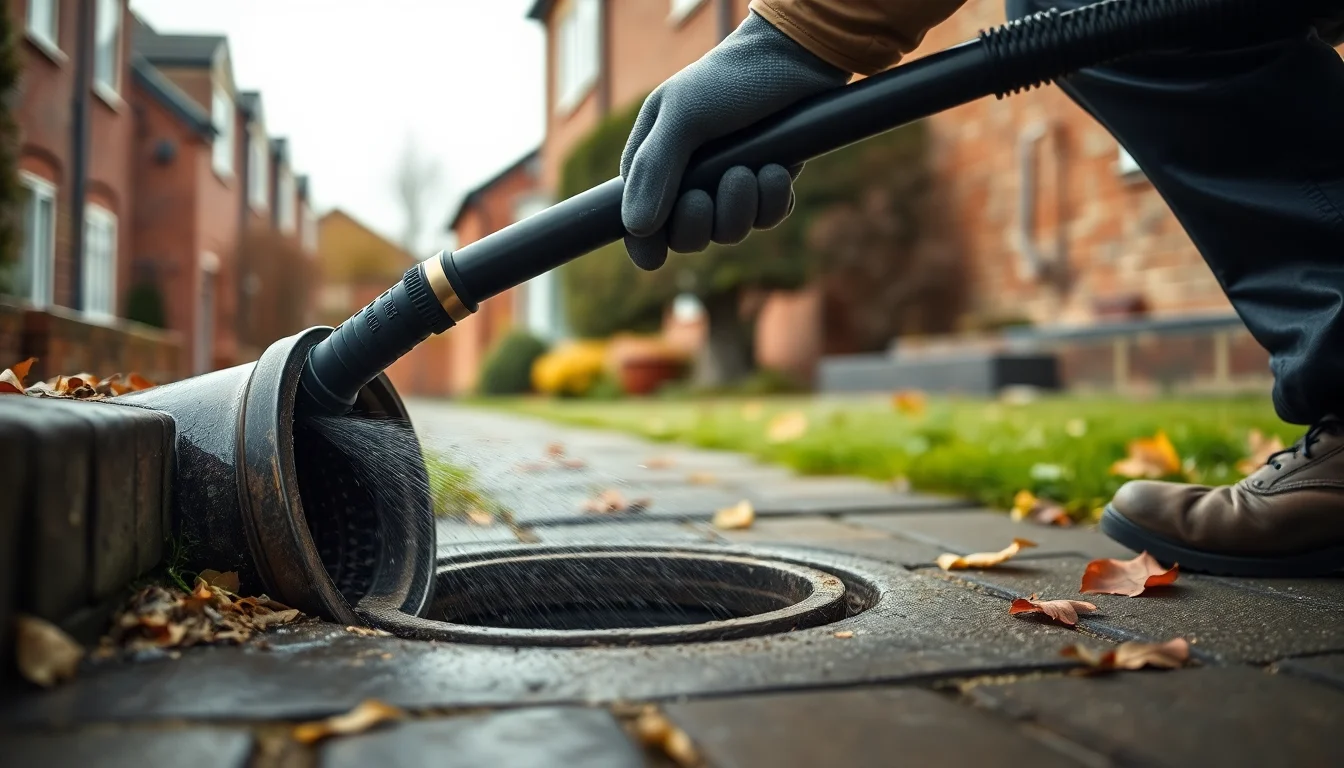
- **High-pressure water jetting**, which uses the force of the water to strip out root growth, silt and debris and flush it through to restore full flow.
Both methods are effective at clearing what's there right now. Our drain jetting service covers this in more detail, and it's also worth knowing the difference between jetting and traditional rodding — see our comparison of drain jetting versus drain rods for when each is the right tool. What neither method does is repair the entry point. Cut the roots back today and, left untreated, new growth will find the same crack again.
How relining stops roots coming back for good
Where a survey shows the joint or pipe wall itself has failed, the durable fix is pipe relining — a resin liner is installed inside the existing pipe and cured in place, creating a new, jointless inner surface. Because relining seals the whole length of the treated section rather than just clearing debris, it removes the gaps roots were exploiting in the first place, without the disruption of digging up a garden or driveway to replace the pipe conventionally. It's not always the answer for every situation — a badly collapsed section may need excavation instead — which is exactly why the CCTV survey comes first: it tells us whether cutting and jetting will hold, or whether the joint needs sealing properly.
Getting a recurring blockage looked at properly
If you're dealing with a drain that blocks in the same place every few months in Aldershot, Ash, or the surrounding villages, treating the symptom repeatedly gets expensive in time even when nothing else. A survey identifies the actual cause first, so any repair work is targeted rather than guessed at. We cover Ash and the surrounding area as well as Aldershot itself.
FAQ
**What causes tree roots to get into drains?** Roots exploit existing weaknesses — cracked joints, fractured pipe walls or loose seals — drawn in by moisture inside the pipe. They don't force their way through intact pipework.
**Can jetting remove roots for good?** Jetting clears root growth and debris effectively, but it doesn't repair the crack or joint the roots got in through, so regrowth is common unless the entry point is also sealed, typically by relining.
**Do I need a survey before root cutting?** Not for a one-off blockage, but if it's recurring, a survey shows whether you're dealing with a simple clear-out or a structural issue that will keep coming back without a repair.
**Is relining disruptive to the garden?** No — that's the main advantage. Relining works through existing access points, so there's no need to dig a trench along the pipe run.